
Homemade Sweet and Sour Sauce (Ready in 20 Minutes, No Food Coloring)
Some of the links in this post are affiliate links. This means if you click on the link and purchase the item, I will receive an affiliate commission at no extra cost to you. All opinions remain my own.
As an Amazon Associate I earn from qualifying purchases.
Last Updated on August 7, 2026 by Heidi Bruaw
Who likes mystery orange sauce packets? Not me. This homemade sweet and sour sauce comes straight from my grandpa’s kitchen, where he made it from scratch every time he cooked up a stir-fry for the family. It’s been our go-to for decades, and once you taste the difference, you’ll understand why we never went back to the bottled stuff.

This sweet and sour sauce recipe comes together in just 20 minutes with eight pantry staples, no red food coloring or mystery ingredients required. The hardest part is finely chopping the green pepper, and everything else is just stir and simmer. Whether you’re serving it over crispy chicken, tofu, or a big bowl of fried rice, this sauce beats any takeout packet, guaranteed.
Quick Facts
- Prep time: 10 minutes
- Cook time: 10 minutes
- Total time: 20 minutes
- Yield: 1.5 cups (about 6 servings)
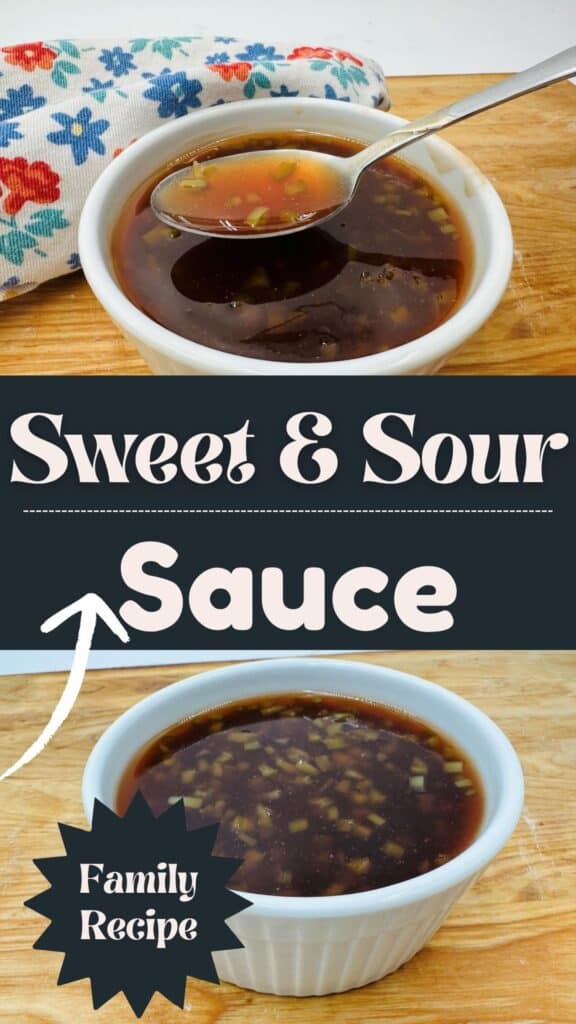
- Main flavor: Sweet, tangy, and savory, with natural color (no food coloring needed)
- Dietary notes: Easily made vegetarian by swapping in vegetable broth
- Storage: Keeps up to 2 weeks in the fridge
- Skill level: Beginner-friendly, one pot, no special equipment
What Each Ingredient Does

Brown sugar: Brings the sweetness and helps thicken the sauce as it simmers. Light or dark both work; dark just gives a slightly deeper molasses flavor.
Cornstarch: The thickening agent that turns this from a thin liquid into a glossy, clingy sauce. Whisk it with the sugar first so it doesn’t clump once the liquid hits the pan.
Red wine vinegar: This is where the “sour” in sweet and sour comes from. It cuts through the sweetness and adds the tang that makes this taste like more than sugar syrup.
Chicken broth: Gives the sauce a savory backbone instead of tasting like straight sweet-and-sour syrup. Low-sodium works well if you want more control over the salt.
Green pepper: Adds fresh crunch and a small pop of color. Chop it fine so it cooks down and blends into the sauce rather than staying crisp.
Soy sauce: Adds saltiness and a savory depth that balances the sugar and vinegar. It’s also part of why this sauce doesn’t need red food coloring; the color comes naturally from the soy sauce and brown sugar.
Garlic powder: Delivers garlic flavor without the extra step of mincing fresh cloves, which matters in a 20-minute recipe.
Ground ginger: Adds warmth and a little spice that keeps the sauce from tasting flat or one-note.
Tips for Success
- Whisk the cornstarch and sugar together first. Combining them before adding any liquid keeps the cornstarch from clumping once it hits the pan, which is the most common reason homemade sauces turn out lumpy instead of smooth.
- Keep the heat at medium, not high. A sweet and sour sauce recipe with cornstarch thickens through gentle, steady heat. High heat can scorch the sugar on the bottom of the pan before the sauce has a chance to thicken properly.
- Stir constantly once it starts to bubble. This is the stretch where the sauce actually thickens, and it only takes a couple of minutes. Walking away here is the easiest way to end up with a scorched pan.
- Chop the green pepper fine. Small pieces cook down into the sauce instead of staying crunchy, so you get flavor and color without big chunks of raw-tasting pepper.
- Taste before you serve. Vinegar and soy sauce brands vary in strength, so a quick taste at the end lets you adjust with an extra splash of broth, vinegar, or brown sugar to get the balance right for your batch.
- Let it cool before storing. Transferring hot sauce straight to a sealed container can trap steam and water down the texture. A few minutes on the counter first keeps it from getting watery in the fridge.
Why You’ll Love Making Sweet and Sour Sauce
Freshness and Control: Homemade sweet and sour sauce gives you a fresher flavor than anything from a bottle or a takeout packet. You control the exact amount of sodium, sugar, and vinegar, so it’s easy to adjust for a low-sodium diet or a tangier batch without changing the whole recipe.
Simple Ingredients: This recipe uses eight common pantry staples you likely already have on hand, no trip to a specialty grocery aisle required. That makes it a realistic weeknight recipe instead of one you save for a special occasion.
Faster Than Delivery: At just 20 minutes start to finish, this sauce is ready faster than most takeout delivery windows. It’s a practical swap on a night when you want that stir-fry flavor without waiting on an order.
No Preservatives or Food Coloring: Store-bought sweet and sour sauce often relies on red dye and preservatives for its color and shelf life. This version gets its natural amber color from the brown sugar and soy sauce alone, so you know exactly what’s in it.
Sense of Accomplishment: There’s real satisfaction in making a sauce from scratch that usually only comes from a restaurant or a packet. Once you’ve made your own, it’s hard to go back to the bottled version.
Substitutions and Variations
Brown Sugar: Swap in an equal amount of granulated sugar, honey, maple syrup, or agave nectar. Honey and maple syrup are sweeter than brown sugar, so start with a little less and add more to taste.
Red Wine Vinegar: Swap with white vinegar, apple cider vinegar, or rice vinegar in a 1:1 ratio. Each brings a different tang:
- White vinegar – sharpest, most acidic flavor
- Apple cider vinegar – fruity, slightly milder notes
- Rice vinegar – mildest option, with a natural touch of sweetness
Cornstarch: Substitute with an equal amount of arrowroot powder, potato starch, or tapioca starch, all work as 1:1 thickeners. Flour can work in a pinch, but use about double the amount to get the same thickening power.
Green Pepper: Swap in other finely chopped vegetables depending on what you want the sauce to do:
- Bell peppers (red, yellow, orange) for color without changing the flavor much
- Carrots for extra sweetness and crunch
- Onions for a more savory, less sweet profile
- Pineapple chunks for a classic, fruitier sweet and sour flavor
Chicken Broth: Use vegetable broth for a vegetarian sweet and sour sauce, or low-sodium broth if you want more control over the salt without changing the recipe otherwise.
Spices: Stir in a pinch of red pepper flakes, a dash of Sriracha, or fresh chopped chili for a spicy sweet and sour sauce.
Fruity Twist: A spoonful of apricot jam or orange marmalade adds a subtle fruit-forward sweetness, closer to what you’d find in a Chinese restaurant’s orange sauce.
Sesame Oil: A drizzle of toasted sesame oil at the end adds a nutty depth that plain sauce doesn’t have.ds a nutty depth of flavor.

Storage Tips
This sauce keeps beautifully, so don’t be afraid to make a full batch even if you’re only cooking for two tonight.
Refrigerator: Let the sauce cool for a few minutes on the counter, then transfer it to an airtight container. It’ll keep in the fridge for up to 2 weeks, which makes it worth doubling the recipe.
Freezer: This sauce freezes well too. Pour it into a freezer-safe container or bag, leaving a little room at the top, and it’ll keep for up to 3 months. Thaw it overnight in the fridge before using.
Reheating: Warm it gently on the stovetop over low heat, stirring so it doesn’t scorch. If it’s thickened up too much in the fridge, whisk in a splash of chicken broth or water until it’s back to pourable.
A couple things to know: The sauce may separate slightly in the fridge or freezer, that’s totally normal. Just give it a good whisk while reheating and it’ll come right back together. And skip storing it in a container with any raw meat or veggies still in it, keep the sauce on its own so it stays good for the full 2 weeks.
Frequently Asked Questions
My sauce turned out too thick. What do I do? Whisk in a little chicken broth, a tablespoon at a time, until it loosens back up to the consistency you want. It comes together fast, so don’t be shy with it.
My sauce is too thin. How do I fix it? Mix a teaspoon of cornstarch with a tablespoon of water to make a slurry, then whisk it into the simmering sauce. Give it a minute to thicken, and repeat if you need it thicker still.
How long does homemade sweet and sour sauce last? Stored in an airtight container in the fridge, this sauce is good for up to 2 weeks. It also freezes well if you want to keep it longer.
Can I make this sauce ahead of time? Yes, and it’s a great one to have on hand. Make it a few days before you need it, store it in the fridge, and reheat it gently on the stovetop when you’re ready to use it.
Does this sauce need red food coloring? Nope. Restaurant-style sweet and sour sauce usually gets that bright red color from food dye. This version gets its natural amber color from the soy sauce and brown sugar instead, no dye needed.
Does this taste like the sweet and sour sauce from a Chinese restaurant? It’s close, but a little different. This version has a fresher, slightly less sweet flavor than most takeout sauce. If you want it closer to that classic taste, add a bit more sugar and soy sauce to taste.
Is this recipe vegetarian? Not as written, since it uses chicken broth, but it’s an easy fix. Swap in vegetable broth and you’ve got a fully vegetarian sweet and sour sauce with no other changes needed.
What’s the difference between sweet and sour sauce and duck sauce? They’re both sweet, tangy, and served alongside similar dishes, but they’re not the same thing. Sweet and sour sauce is usually red or amber and vinegar-forward like this one, while duck sauce is typically made from plums or apricots and has a fruitier, jam-like flavor.
Can I make this sauce spicy? Definitely. Stir in a pinch of red pepper flakes, a dash of Sriracha, or some fresh chopped chili while it simmers, and adjust to how much heat you want.
What to Serve with Sweet and Sour Sauce
Protein: Sweet and sour sauce is classically served with chicken, pork, or tofu, though it works well with shrimp too.
- Chicken: Deep-fried, stir-fried, or baked chicken pieces are the most popular pairing. Chicken Stir Fry is perfect for this sauce. My Baked Chicken Bites with Potato Chip Breading also make a great dipper for this sauce.
- Pork: Slow Cooker Pork Loin or meatballs work well. Pork Belly Stir Fry would also be delicious.
- Tofu: Cubed, pan-fried tofu soaks up the sauce beautifully and is an easy vegetarian swap.
- Shrimp: Quick-seared shrimp takes on this sauce fast and works well over rice or noodles for a lighter dinner.
Rice: Steamed white rice is the traditional base for soaking up the sauce. Brown rice or quinoa offer a more whole-grain option, and Instant Pot Fried Rice would also be delicious.
Stir-Fried Vegetables: A colorful mix of broccoli, carrots, snow peas, and bell peppers complements the sweet and sour flavors and rounds the meal out.
Chow Mein: For a heartier option, serve the sauce over chow mein noodles.
Spring Rolls: Drizzle some sauce over your favorite spring rolls for a dipping sauce or flavor boost. These Air Fryer Spring Rolls would be great with this sauce.
Egg Rolls: Sweet and sour sauce makes a great dipping sauce for egg rolls too, a good option if you’re keeping things simple with a store-bought or freezer variety.
Lettuce Wraps: For a lighter option, spoon sauced chicken or pork into lettuce cups instead of over rice.
Other Recipes You May Enjoy
If you like this Sweet and Sour Sauce, you might also like my Barbecue Sauce or my Tartar Sauce. This Orange Sauce and this Hot Honey Recipe are also delicious. You may also want to try this Air Fryer Sweet and Sour Chicken.
Sweet and Sour Sauce


Ingredients
- ½ Cup Brown Sugar packed
- 1 Tablespoon Cornstarch
- ½ Cup Red Wine Vinegar
- ½ Cup Chicken Broth
- ¼ Cup Green Pepper finely chopped
- 1 Tablespoon Soy Sauce
- ¼ teaspoon Garlic Powder
- ¼ teaspoon Ground Ginger
Instructions
- In a small saucepan, combine the brown sugar and the cornstarch.
- Stir in the rest of the ingredients.
- Cook over medium heat, stirring constantly, until thick and bubbly (approximately 10 minutes).
- Serve warm.
Notes
- Whisk the cornstarch and sugar together first. Combining them before adding any liquid keeps the cornstarch from clumping once it hits the pan, which is the most common reason homemade sauces turn out lumpy instead of smooth.
- Keep the heat at medium, not high. A sweet and sour sauce recipe with cornstarch thickens through gentle, steady heat. High heat can scorch the sugar on the bottom of the pan before the sauce has a chance to thicken properly.
- Stir constantly once it starts to bubble. This is the stretch where the sauce actually thickens, and it only takes a couple of minutes. Walking away here is the easiest way to end up with a scorched pan.
- Chop the green pepper fine. Small pieces cook down into the sauce instead of staying crunchy, so you get flavor and color without big chunks of raw-tasting pepper.
- Taste before you serve. Vinegar and soy sauce brands vary in strength, so a quick taste at the end lets you adjust with an extra splash of broth, vinegar, or brown sugar to get the balance right for your batch.
- Let it cool before storing. Transferring hot sauce straight to a sealed container can trap steam and water down the texture. A few minutes on the counter first keeps it from getting watery in the fridge.
Amazon and the Amazon logo are trademarks of Amazon.com, Inc, or its affiliates.




Assuming you could sub veggie stock to make it vegetarian friendly? Any idea if fresh garlic and ginger would be ok? Or is this one of those times when the powered stuff is better?
Yes, you could sub veggie stock in this recipe. Fresh would definitely be ok, it just won’t dissolve the same way. If you’re okay with that, then it will be fine! I hope you enjoy!