Dorothy Dean’s Bread Dressing Recipe: The Newspaper Clipping Grandma Never Threw Out
Some of the links in this post are affiliate links. This means if you click on the link and purchase the item, I will receive an affiliate commission at no extra cost to you. All opinions remain my own.
As an Amazon Associate I earn from qualifying purchases.
Last Updated on September 13, 2026 by Heidi Bruaw
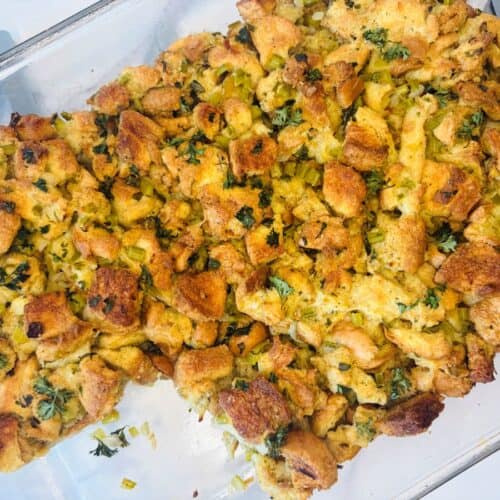
Bread dressing is baked stuffing. Toasted bread cubes, celery, onion, butter, and poultry seasoning, all baked in a dish instead of inside the turkey. This one’s from Dorothy Dean, the Home Economics name at Spokane’s Spokesman-Review from 1935 to 1983, and here’s the twist: she was never a real person. Dorothy Dean was a role, passed from one home economist to the next, and those women ran a test kitchen, published recipes, and answered thousands of phone calls from cooks who needed help.
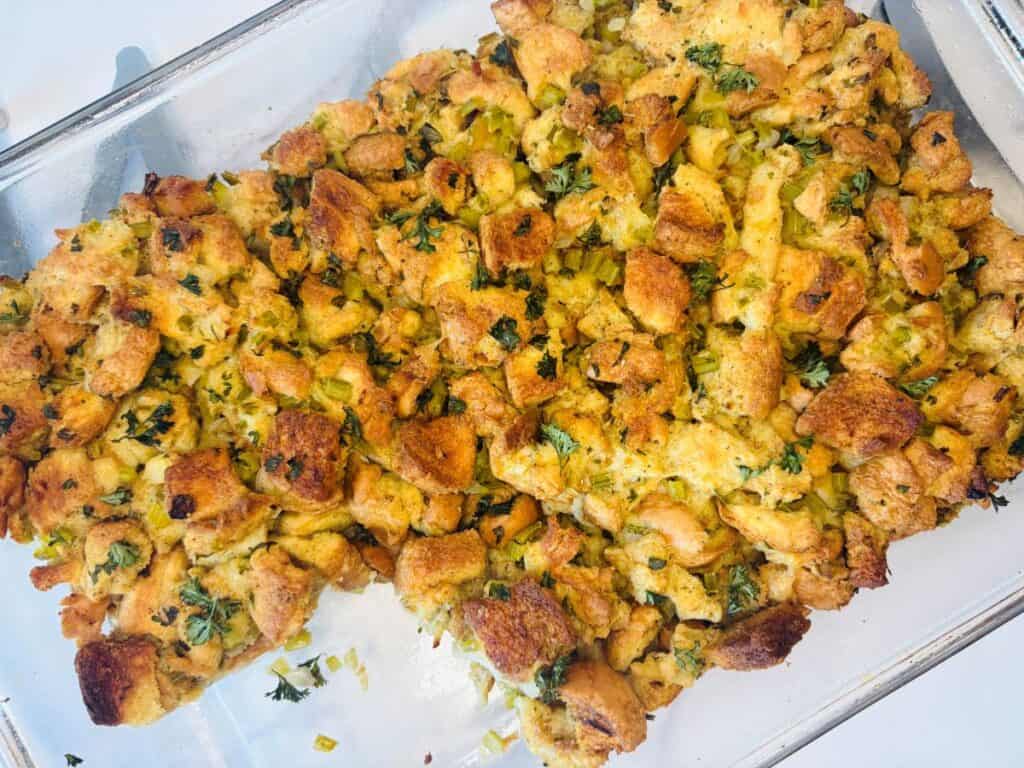
I found this one buried in my pile of old clippings and cookbooks. People have been stuffing birds with stale bread and herbs since colonial days, but somewhere along the way we got smart and started baking it separately so everybody could grab a crispy corner piece. My son and I are the only people in our house who like dressing, aka stuffing, so we got the whole pan to ourselves.
Quick Facts
- What is bread dressing? Bread dressing is a savory side dish made from toasted bread cubes, celery, onion, butter, broth, and poultry seasoning, baked in a casserole dish.
- Dressing or stuffing? Same basic recipe, different cooking method. Dressing bakes in a dish. Stuffing goes inside the bird.
- Where this recipe comes from: The Dorothy Dean Home Economics department at The Spokesman-Review in Spokane, Washington, which ran from 1935 to 1983. Dorothy Dean was a pen name, not a person. Several home economists held the job over those 48 years.
- Prep time: About 25 minutes
- Cook time: 1 hour 30 minutes at 325°F
- Total time: About 2 hours
- Servings: 12 to 14
- Pan size: 4-quart baking dish
- Main ingredients: White bread, butter, celery, onion, parsley, poultry seasoning, broth
- Best for: Thanksgiving, Christmas, Easter dinner, and any Sunday roast chicken
- Make it ahead? Yes. Assemble it the day before, cover, refrigerate, and add about 15 minutes to the bake time.
- Can you freeze it? Yes. Freeze baked dressing up to 3 months. Thaw overnight in the fridge before reheating.
What Each Ingredient Does
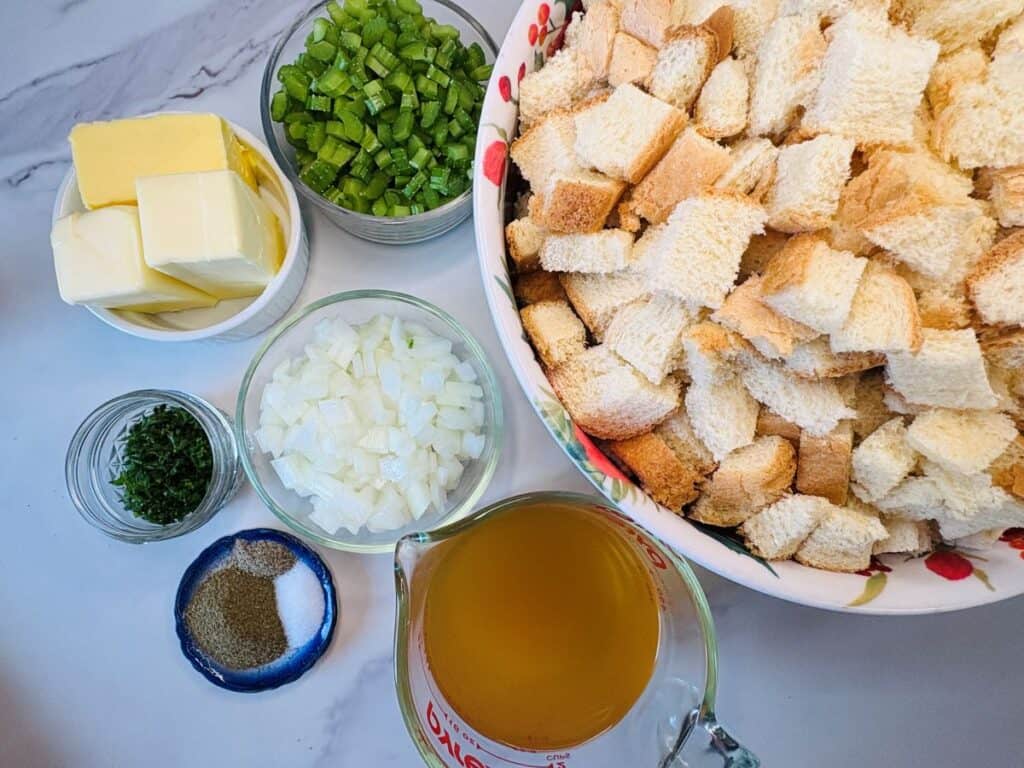
- White bread (2 pounds), cubed and toasted: This is the whole structure of the dish. Toasting at 300°F dries the cubes out so they soak up broth without turning to mush. Soft fresh bread collapses. Dry bread holds its shape and gives you that crispy top with a tender middle.
- Butter (1.5 cups): Butter carries flavor and keeps the dressing from drying out during a long bake. It also cooks the celery and onion, so all that vegetable flavor ends up in the fat and gets poured right over the bread. This is a generous amount, and that’s on purpose in a recipe this size.
- Celery (2 cups, chopped): Celery brings a mild savory backbone and a little texture so every bite isn’t soft. Simmering it in butter first takes away the raw crunch and sharp edge. It’s one half of the flavor base almost every American dressing is built on.
- Onion (1.5 cups, chopped): Onion is the other half of that base. Cooking it in butter for 10 to 15 minutes turns it sweet and mellow instead of sharp. Without it the dressing tastes flat no matter how much seasoning you add.
- Parsley (1/4 cup, minced): Parsley adds a clean, fresh note that cuts through all that butter. It also adds green flecks to a dish that’s otherwise beige. Fresh is better here since it goes in at the end and isn’t cooked down.
- Poultry seasoning (3.5 teaspoons): This is the flavor that makes dressing taste like dressing. It’s a blend, usually sage, thyme, marjoram, rosemary, and sometimes nutmeg, with sage leading the way. Three and a half teaspoons sounds like a lot, but you’re seasoning 2 pounds of bread.
- Salt (1.5 teaspoons) and pepper (1/2 teaspoon): Salt brings out every other flavor. Bread and butter both need it, or the whole pan tastes dull. If your broth is already salty, start with less and taste before it goes in the oven.
- Broth or bouillon (3 cups): The liquid turns dry toasted cubes into actual dressing. It also adds savory depth that plain water can’t. Three cups is the right starting point for 2 pounds of bread, though older or drier bread may take a splash more.
Tips for Success
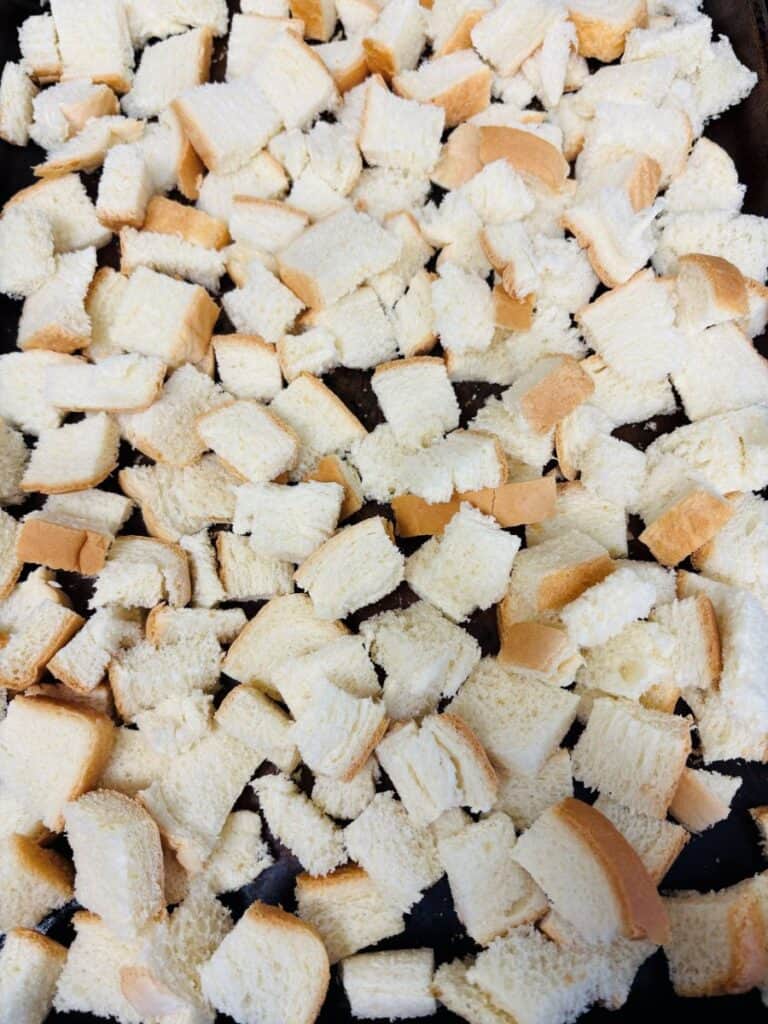
- Don’t skip the toasting step. Ten minutes at 300°F is the difference between dressing and bread pudding. Dry cubes drink up the broth and hold their shape. Wet bread turns to paste.
- Day-old bread works even better. If your loaf has been sitting out overnight, you’re already halfway there. Toast it anyway; just watch it more closely since it’ll crisp faster.
- Cut your cubes about the same size. Half-inch is a good target. Wildly different sizes mean some pieces turn to mush while others stay hard in the middle.
- Chop the celery and onion small. Nobody wants to bite into a big chunk of celery. Small pieces disappear into the dressing and spread the flavor everywhere.
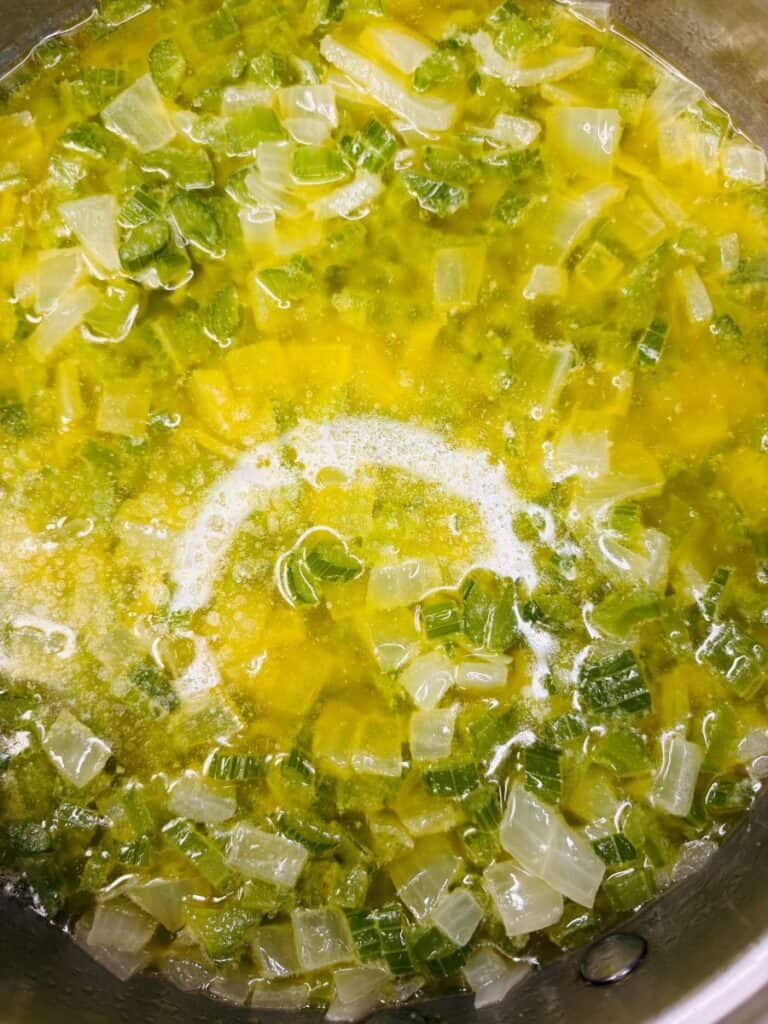
- Simmer the vegetables low and slow. The full 10 to 15 minutes matters. You want them soft and sweet, not browned, and butter scorches fast over high heat.
- Pour the butter and vegetables over the bread while hot. The warm butter coats the cubes better, and the bread soaks it right up.
- Toss lightly. Seriously. Stir it like you mean it, and you’ll break the cubes apart. A gentle fold keeps the texture.
- Add the broth a little at a time. Older or drier bread may need more than 3 cups. Newer bread may need slightly less. You want the cubes moist but not swimming.
- Press it in lightly, not hard. Packing it down tight makes it dense. A light press is enough to get an even layer.
- Taste before it goes in the oven. This is your only chance to fix the salt. If your broth is already salty, you may need less than the recipe calls for.
- Uncover it at the end if you want a crispy top. Bake covered for 1.5 hours. Remove the lid for the last 15 to 20 minutes for browning.
- Use an internal temp check if you’re nervous. 165°F in the center means it’s done and safe.
- Make it a day ahead. Assemble, cover, refrigerate, and add about 15 minutes to the bake since it’s going in cold.
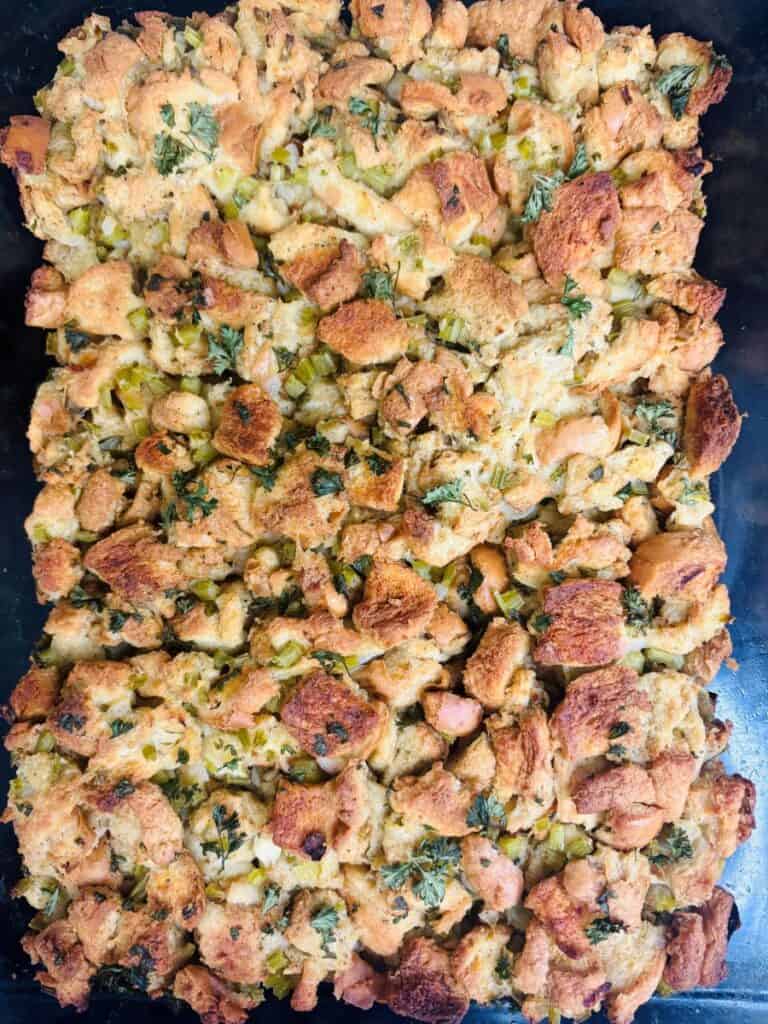
Why You’ll Love Bread Dressing
- Everybody gets a crispy edge. Baking it in a dish instead of inside the bird bakes the whole top. No fighting over the good parts.
- It feeds a crowd. Two pounds of bread in a 4-quart dish covers 12 to 14 people.
- You can make it the day before. Assemble it, refrigerate it, and bake it while the turkey rests. One less thing competing for oven space on the big day.
- It tastes like the real thing. Poultry seasoning, butter, and actual celery and onion beat anything that comes out of a box. You’ll notice the difference in one bite.
- It works for more than Thanksgiving. Christmas dinner, Easter ham, a Sunday roast chicken, or a random Tuesday when you want something warm. Nobody’s checking the calendar.
- It’s forgiving. Add a splash more broth, a little less salt, or a different bread.
Substitutions and Variations
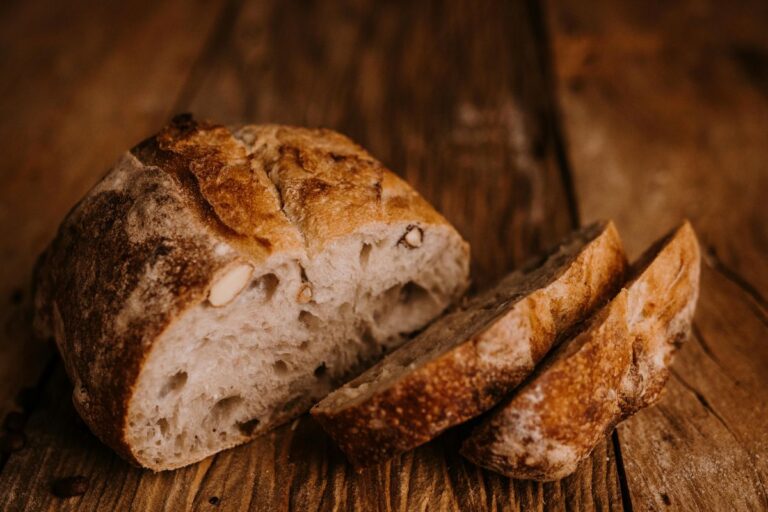
Sourdough instead of white bread. Same 2 pounds. It gives you a tangier, chewier dressing with more structure.
French bread or a country loaf. Another one-for-one swap. Both toast up nicely.
Turkey broth instead of chicken. If you’ve got drippings from the bird, use them. It’s the easiest flavor upgrade.
Vegetable broth. Makes the whole dish vegetarian with no other changes. Same 3 cups.
Make your own poultry seasoning. Use 2 teaspoons dried sage, 1 teaspoon dried thyme, 1/2 teaspoon marjoram, and 1/4 teaspoon rosemary in place of the 3.5 teaspoons. Sage is the flavor people recognize as dressing, so don’t skimp there.
Sausage Dressing. Substitute 1 pound bulk sausage or cut-up link sausage for butter; use all drippings.
Oyster Dressing. Add 1 12-ounce jar of raw oysters, cut up, or 2 8-ounce cans of oysters, drained.
Cornbread dressing. Substitute 5 to 6 cups crumbled cornbread for 1 pound of bread; stir in 2 beaten eggs.
Sautéed mushrooms. Cook them with the celery and onion. Deepens the savory flavor without changing anything else.
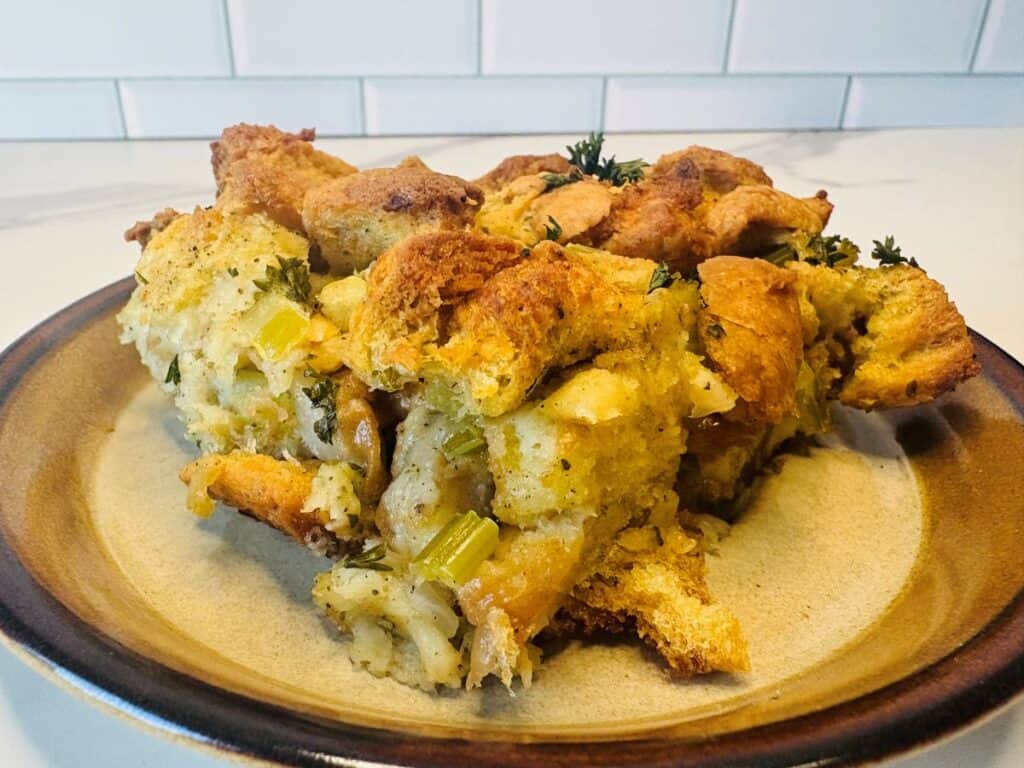
Storage Tips
- Refrigerator. Cover tightly or move it to an airtight container, and it keeps 3 to 4 days in the fridge. Get it in there within two hours of coming out of the oven.
- Freezer. Baked bread dressing freezes well for up to 3 months. Wrap it in plastic and then foil, or portion it into freezer containers so you can pull out just what you need. Label it with the date, because by January every foil package in the freezer looks the same.
- Thawing. Move it to the fridge overnight. Don’t thaw it on the counter.
- Reheating in the oven. This is the best method. Cover with foil, add a splash of broth over the top to restore moisture, and bake at 325°F for 20 to 30 minutes, until hot in the middle. Pull the foil for the last 5 minutes if you want the top crisp again.
- Reheating in the microwave. Fine for a single serving. Add a spoonful of broth, cover, and heat in one-minute bursts.
- Reheating from frozen. Cover and bake at 325°F for about an hour. Thawing first is easier and more even.
- Make-ahead storage. Assemble the whole thing, cover, and refrigerate up to 24 hours before baking. Add about 15 minutes to the bake time since it’s going in cold from the fridge.
- Freezing unbaked. You can, but the texture suffers. The bread keeps absorbing liquid while it sits. Bake first, then freeze for better results.
- Food safety note. Dressing should reach 165°F in the center, whether it’s the first bake or a reheat.
Frequently Asked Questions
What’s the difference between dressing and stuffing? Same recipe, different cooking method. Dressing bakes in a casserole dish. Stuffing goes inside the bird. The word you use mostly depends on where you grew up, since dressing is the common term across the South while stuffing dominates in the North.
Can I make bread dressing ahead of time? Yes. Assemble it completely, cover, and refrigerate up to 24 hours. Add about 15 minutes to the bake time since it’s going into the oven cold.
Why is my dressing soggy? Almost always the bread. If the cubes aren’t toasted dry enough, they can’t absorb the broth and collapse instead. Toast at 300°F until the cubes are genuinely crisp, not just warm.
Why is my dressing dry? Not enough liquid, or it baked uncovered too long. Older bread drinks up more broth than fresh bread, so add a splash more if the cubes still look thirsty before they go in the dish.
Can I use day-old or stale bread? Yes, and it’s better. Stale bread is already partly dried out. Toast it anyway, just for less time.
What kind of bread is best? This recipe calls for plain white sandwich bread for that classic texture. Sourdough and French bread both work well if you want more chew.
Can I freeze bread dressing? Yes, up to 3 months once baked. Thaw overnight in the fridge, then reheat covered at 325°F with a splash of broth.
How do I get a crispy top? Uncover it for the last 15 to 20 minutes of baking. The recipe bakes covered the whole time, which keeps it moist but skips the browning.
Can I bake this inside the turkey? You can, but the food safety rules get stricter. Stuffing inside a bird has to hit 165°F in the center, which usually means overcooking the turkey to get there. Baking it separately is safer and easier.
How many people does this feed? About 12 to 14. Two pounds of bread in a 4-quart dish is a big pan, so it’s built for a holiday table.
Can I make it vegetarian? Swap the broth for vegetable broth. Everything else in the recipe is already meat-free.
What can I use instead of poultry seasoning? Mix 2 teaspoons dried sage, 1 teaspoon dried thyme, 1/2 teaspoon marjoram, and 1/4 teaspoon rosemary. Sage is the flavor that makes it taste like dressing.
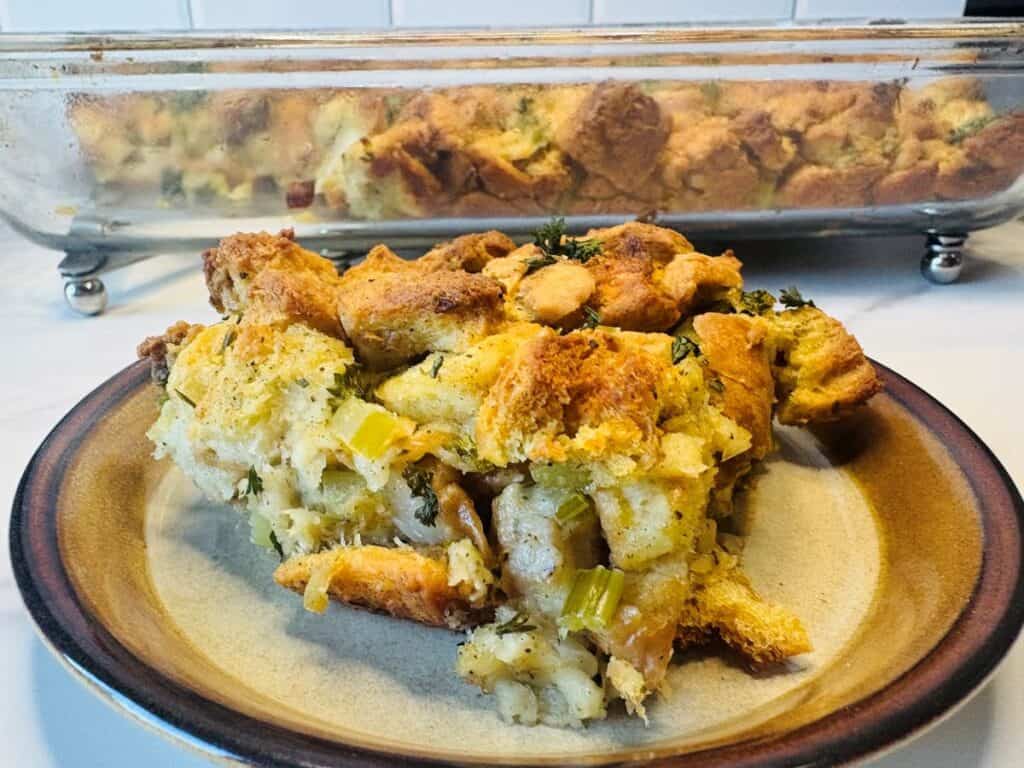
What to Serve with Bread Dressing
- Roast turkey is the obvious partner, and this recipe was built for exactly that kind of table. Roast chicken does the same job on a regular Sunday, and a holiday ham works beautifully at Easter or Christmas. If you want to keep the oven free, a slow cooker rump roast is a great idea. Roast pork loin with apples, Cornish game hens for a smaller crowd, or prime rib for a full Christmas spread all work too.
- Gravy is not optional. Turkey or chicken gravy made from the pan drippings is what you want, and if you need a base to build on, my white sauce uses the same technique with a different liquid.
- Mashed potatoes belong on a holiday plate, and nobody is going to argue about it. Surprise potatoes are a good make-ahead option, and loaded hashbrowns give you something a little different. Sweet potato puffs bring a sweetness that plays well against all that sage. Scalloped potatoes, twice-baked potatoes, candied yams with marshmallows, or a wild rice pilaf will all round out the starch side of the table.
- For vegetables, green beans almondine with bacon is my pick because the crunch is a welcome break from soft dressing. Orange-glazed carrots add color, and slow-cooker creamed corn frees up your oven entirely. Green bean casserole is the one everybody expects, and roasted Brussels sprouts with bacon, corn casserole, roasted root vegetables, or creamed pearl onions are all great sides.
- You need something tart or crunchy to cut through all that butter. Cranberry sauce is the traditional answer, and the acid does exactly what it needs to do. Cabbage apple salad brings the crunch, and carrot raisin salad is another old-school choice that belongs on a table like this. Classic coleslaw is great with a Sunday chicken, and Watergate salad is the retro pick that always disappears first. Homemade cranberry orange relish, Waldorf salad, ambrosia, or pickled beets will all do the job too.
- Bread on a table that already has dressing sounds like too much, and yet here we are. Grandma’s Parker House rolls are the classic holiday roll, and baking powder biscuits come together faster. Crescent rolls, cornbread, or popovers are all easy alternatives if you want to hand someone else a job.
- Save room for dessert, or at least pretend you will. Pumpkin chiffon pie and pumpkin torte are both made for a holiday table; apple pie never misses, and apple crisp is the easier route. Pecan pie, sweet potato pie, pumpkin roll, or cherry cheesecake will all work, and my Thanksgiving pies roundup has plenty more.
- If you’re planning the whole spread, my Thanksgiving sides roundup covers the rest of the table. And if you’re a cornbread family, my homemade cornbread stuffing is perfect.
Other Recipes You May Enjoy
You may also enjoy my Stuffed Baked Potatoes or my Old-Fashioned Homemade Bread. This Dressed Up Stovetop Stuffing is also delicious.
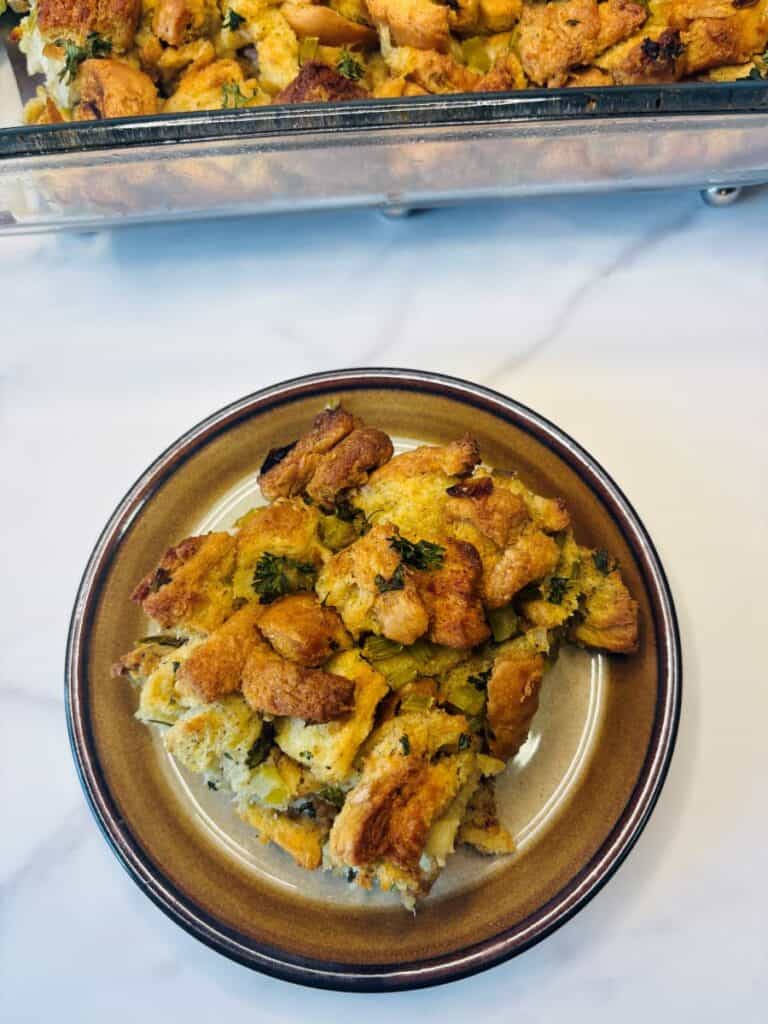
Bread Dressing

Equipment
Ingredients
- 2 Pounds White Bread cut into cubes
- 1½ Cups Butter
- 2 Cups Celery chopped
- 1½ Cups Onion chopped
- ¼ Cup Parsley minced
- 3½ teaspoons Poultry Seasoning
- 1½ teaspoons Salt
- ½ teaspoon Black Pepper
- 3 Cups Broth or Bouillon
Instructions
- Preheat oven to 300℉.
- Toast the bread in the oven until crisp.
- Place the bread in a large bowl.
- Simmer the celery and onions in the butter for 10-15 minutes.
- Pour the vegetable and butter mixture over the bread.
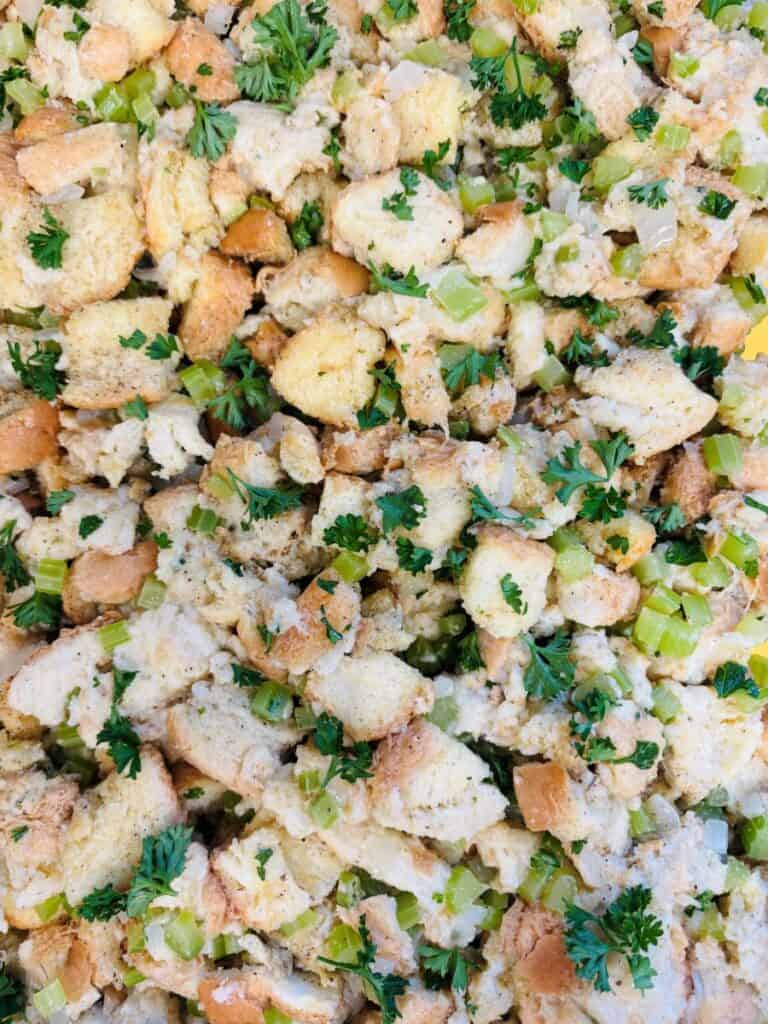
- Add the parsley and seasonings and toss lightly.
- Add enough broth or bouillon to reach the desired consistency.
- Press lightly into a 4-quart baking dish.
- Cover and bake at 325℉ for about 1 hour and 15 minutes.
- Remove the cover and bake for another 15-20 minutes.
Notes
- Don’t skip the toasting step. Ten minutes at 300°F is the difference between dressing and bread pudding. Dry cubes drink up the broth and hold their shape. Wet bread turns to paste.
- Day-old bread works even better. If your loaf has been sitting out overnight, you’re already halfway there. Toast it anyway; just watch it more closely since it’ll crisp faster.
- Cut your cubes about the same size. Half-inch is a good target. Wildly different sizes mean some pieces turn to mush while others stay hard in the middle.
- Chop the celery and onion small. Nobody wants to bite into a big chunk of celery. Small pieces disappear into the dressing and spread the flavor everywhere.
- Simmer the vegetables low and slow. The full 10 to 15 minutes matters. You want them soft and sweet, not browned, and butter scorches fast over high heat.
- Pour the butter and vegetables over the bread while hot. The warm butter coats the cubes better, and the bread soaks it right up.
- Toss lightly. Seriously. Stir it like you mean it, and you’ll break the cubes apart. A gentle fold keeps the texture.
- Add the broth a little at a time. Older or drier bread may need more than 3 cups. Newer bread may need slightly less. You want the cubes moist but not swimming.
- Press it in lightly, not hard. Packing it down tight makes it dense. A light press is enough to get an even layer.
- Taste before it goes in the oven. This is your only chance to fix the salt. If your broth is already salty, you may need less than the recipe calls for.
- Uncover it at the end if you want a crispy top. Bake covered for 1.5 hours. Remove the lid for the last 15 to 20 minutes for browning.
- Use an internal temp check if you’re nervous. 165°F in the center means it’s done and safe.
- Make it a day ahead. Assemble, cover, refrigerate, and add about 15 minutes to the bake since it’s going in cold.
Amazon and the Amazon logo are trademarks of Amazon.com, Inc, or its affiliates.